
Development of Bionic Interfaces: What Truly Works in 2025 and the Barriers That Remain
Bionic interfaces have advanced significantly over the past decade, moving from experimental prototypes to medically validated systems that help people regain mobility, sensation, and functional independence. By 2025, several technologies have reached stable clinical application, while others remain in the research phase due to engineering, biological, ethical, and regulatory constraints. This text provides an objective overview of what is functioning reliably today and where the challenges still lie.
Clinically Proven Bionic Interfaces in 2025
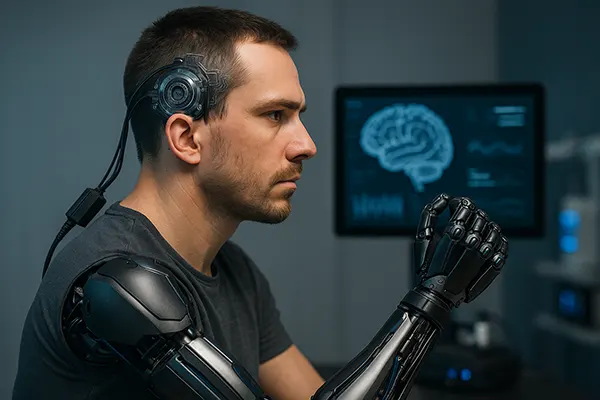
One of the most mature categories is neural-controlled prosthetics. Devices that connect to peripheral nerves through implanted electrodes allow users to perform controlled movements with higher precision than earlier generations. These systems rely on stable decoding algorithms that translate nerve impulses into actuator commands, enabling smoother and more intuitive operation.
Cochlear and retinal implants remain the most established examples of sensory-restoring technologies. Modern cochlear implants provide enhanced frequency resolution, while biocompatible electrode arrays ensure long-term safety. Retinal prostheses, though offering limited vision, have expanded accessibility for individuals with degenerative conditions such as retinitis pigmentosa.
Spinal cord stimulation has also become a validated clinical method for restoring partial movement in some patients with paralysis. By 2025, closed-loop stimulators using real-time feedback allow more accurate modulation of motor circuits. This has improved walking assistance and rehabilitation outcomes in controlled medical settings.
Technical Foundations Behind These Advancements
Recent progress comes largely from improvements in materials science. Flexible electrodes made from graphene-based composites reduce inflammatory responses and maintain stable conductivity, allowing implants to remain functional over longer periods. This reliability is essential for daily medical use.
Machine learning models integrated into bionic systems now interpret neural patterns more accurately, adjusting to the user’s biological signals over time. Adaptive algorithms increase accuracy even as the body changes, improving daily performance without repeated recalibration.
Power efficiency has also improved considerably. Modern bionic devices operate on low-energy microchips with optimised signal processing. Wireless charging pads and high-density batteries reduce user discomfort and allow longer operation between charges, contributing to overall practicality.
Emerging Technologies Approaching Real-World Application
Brain–computer interfaces (BCIs) based on minimally invasive implants are one of the most promising directions. Companies and research groups have achieved stable high-bandwidth recording from neural tissue using electrode arrays inserted through tiny cranial openings. These systems already support typing, communication, and robotic arm control for individuals with severe paralysis.
Non-invasive BCIs, using advanced magnetoencephalography and high-resolution EEG, have improved decoding precision. Although they cannot match the accuracy of implanted systems, they are becoming an accessible option for assisting communication or controlling external devices without surgery.
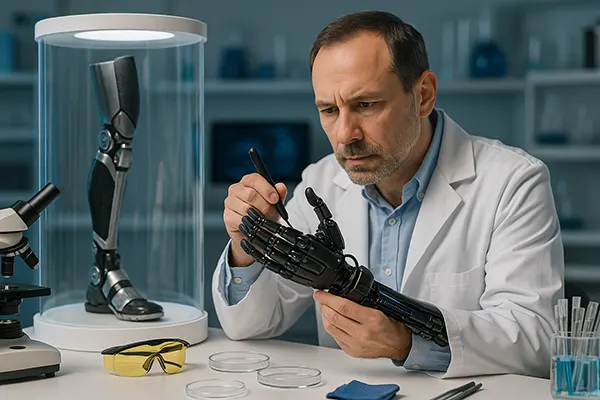
Bionic limbs featuring artificial sensory feedback are also progressing. Tactile sensors built into prosthetic surfaces transmit signals to neural interfaces, enabling users to perceive pressure or texture. While not yet identical to biological sensation, these systems significantly enhance object handling and safety.
Scientific Barriers Slowing Deployment
Despite encouraging progress, neural interface stability remains a challenge. Biological tissue reacts to foreign objects, forming scar layers that can reduce signal quality over time. Although new biocompatible materials minimise this effect, ensuring decades-long functionality remains a scientific priority.
Scaling production is another limitation. High-precision implants require complex manufacturing processes, which increases cost and limits availability. Until scalable fabrication methods are established, some technologies will remain restricted to research centres or specialised clinics.
Data interpretation also presents difficulties. Neural signals vary significantly across individuals, meaning that calibration for each user is complex. Developing universal models that still account for personal biological differences is a substantial obstacle for broader adoption.
Ethical, Regulatory, and Social Questions
Widespread use of bionic interfaces raises privacy concerns, particularly for technologies capable of interpreting neural activity. Regulatory bodies in 2025 require strict data-handling protocols, ensuring that information from implants cannot be accessed by unauthorised parties. Such frameworks continue to evolve alongside the technologies themselves.
Access and affordability remain major issues. While some medical systems are covered by insurance in certain countries, others require substantial personal investment. This creates inequality in the availability of life-changing devices, prompting ongoing debates about national healthcare policies and funding models.
Long-term safety remains under evaluation. Although short-term clinical trials demonstrate positive outcomes, comprehensive lifetime studies are still underway. Regulators require ongoing post-market monitoring to detect unforeseen complications that may arise years after implantation.
Potential Directions for Future Growth
Researchers aim to create fully integrated neural systems capable of combining movement, sensation, and cognitive control within a single architecture. Achieving this would allow bionic limbs to behave more like biological extensions rather than external devices.
Regenerative technologies may contribute to future breakthroughs. Combining neural interfaces with tissue engineering could support repair of damaged nerves, enhancing signal transmission and reducing reliance on hardware-based implants.
Interdisciplinary collaboration will be essential. Advances in robotics, AI, biology, and clinical practice must converge to achieve the next generation of bionic capabilities. The path forward requires not only technical excellence but also medical oversight, ethical consideration, and sustainable access models.