
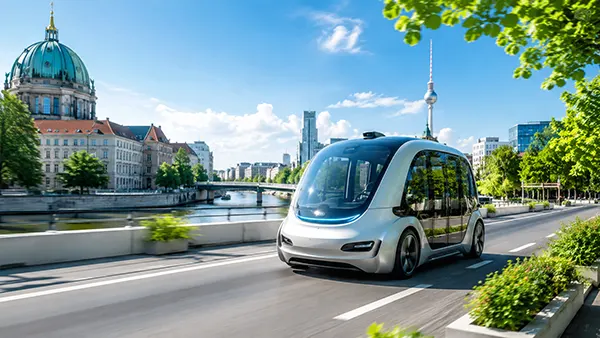
Robotaxis in Europe: Why 2026 Could Be a Turning Point for Autonomous Transport
Autonomous vehicles have been discussed for more than a decade, yet widespread commercial deployment has remained limited. In 2026, however, several factors are converging across Europe that could accelerate the transition from pilot projects to regular public services. Advances in artificial intelligence, improved sensor technology, evolving legislation, and growing investment from automotive manufacturers are creating conditions that were not present only a few years ago. While significant challenges remain, the robotaxi sector is entering a phase where practical implementation is becoming more realistic than ever before.
The Current State of Robotaxi Development in Europe
Europe entered the autonomous mobility race later than some regions of the United States and China, but the continent has made notable progress in recent years. Companies such as Mobileye, Volkswagen Group, Waymo, Baidu, WeRide, and several European technology firms have expanded testing programmes across major cities. Pilot projects have appeared in Germany, France, Spain, Switzerland, and the Nordic countries, providing valuable real-world data under diverse driving conditions.
One of the most significant developments has been the increasing cooperation between vehicle manufacturers and software providers. Traditional automotive companies possess extensive expertise in vehicle engineering, while technology firms contribute artificial intelligence systems capable of interpreting complex urban environments. This combination has accelerated the maturity of autonomous driving systems and reduced the gap between testing and commercial deployment.
Regulatory progress has also played an important role. European authorities have gradually developed frameworks that allow autonomous vehicle testing on public roads while maintaining strict safety standards. Germany, in particular, has established itself as one of the leading countries for autonomous mobility legislation, providing clearer pathways for commercial robotaxi operations.
Why European Cities Present Unique Challenges
Unlike many modern urban areas built around wide roads and predictable layouts, European cities often feature centuries-old infrastructure. Narrow streets, historic districts, mixed traffic conditions, and a high concentration of pedestrians create demanding environments for autonomous systems. These factors require more sophisticated navigation capabilities than those needed in many suburban settings.
Weather conditions further increase complexity. Robotaxis operating in Northern Europe must function reliably during rain, fog, snow, and low-light conditions. Sensor suites combining cameras, radar, lidar, and advanced mapping technologies are therefore essential for maintaining safety and operational consistency throughout the year.
Cultural and behavioural differences also affect deployment strategies. Traffic habits vary considerably between European countries, meaning autonomous systems must adapt to different driving styles, road markings, and local regulations. Companies seeking large-scale deployment must demonstrate that their technology can perform effectively across multiple jurisdictions rather than within a single market.
Technological Advances Driving the 2026 Expansion
Artificial intelligence has become significantly more capable since the early autonomous vehicle experiments of the 2010s. Modern machine-learning models can process enormous volumes of sensor data in real time, allowing vehicles to identify hazards, predict traffic movements, and make driving decisions with greater accuracy. These improvements are helping reduce the frequency of disengagements and manual interventions.
High-definition mapping technologies have also evolved substantially. Many robotaxi operators now combine detailed pre-mapped environments with live sensor analysis, enabling vehicles to respond dynamically to changing road conditions. This hybrid approach improves reliability while reducing dependence on static mapping information.
Another important factor is the increasing computational power available within vehicles. Advanced automotive processors can now perform complex calculations directly inside the vehicle, reducing latency and enabling faster responses to unexpected situations. This capability is particularly important in dense urban traffic where reaction times are critical.
The Role of Artificial Intelligence and Data Collection
Every kilometre driven by an autonomous vehicle contributes to the improvement of future driving models. Data collected from test fleets helps engineers identify unusual scenarios, refine algorithms, and enhance system performance. As robotaxi fleets expand, the rate of learning increases, creating a feedback loop that continuously improves operational safety.
Simulation technology has become another powerful tool. Developers can now recreate millions of virtual driving situations that would be difficult or dangerous to encounter in real-world testing. This approach allows autonomous systems to experience rare events and edge cases before they occur on public roads.
Cloud connectivity further strengthens these capabilities. Fleet operators can analyse performance data across thousands of vehicles, identify recurring issues, and distribute software updates remotely. As a result, improvements can be implemented across entire fleets much faster than traditional vehicle development cycles would allow.
What Could Make 2026 a Defining Year for Autonomous Transport
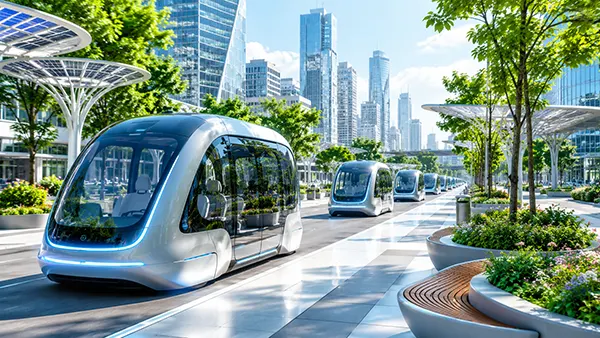
Several industry forecasts suggest that 2026 may represent the beginning of broader commercial robotaxi adoption in Europe. Multiple manufacturers are preparing autonomous mobility services designed specifically for urban environments, while public authorities are increasingly willing to support pilot programmes aimed at reducing congestion and emissions.
Economic factors are also influencing momentum. Labour shortages in certain transport sectors, combined with growing demand for flexible mobility services, are encouraging investment in autonomous solutions. Although robotaxis are unlikely to replace traditional transport options in the near future, they could complement existing networks and improve accessibility in selected areas.
Public perception has gradually evolved as well. Early scepticism remains, but increasing exposure to autonomous technology through advanced driver-assistance systems has familiarised many consumers with automated vehicle functions. Greater public acceptance may help accelerate adoption once commercial services become more widely available.
Challenges That Still Need to Be Overcome
Safety remains the most important consideration. Regulators, operators, and manufacturers must demonstrate that autonomous systems can consistently perform at a level that meets or exceeds human driving standards. Transparent reporting and independent testing will remain essential for building public trust.
Cybersecurity is another critical issue. Connected vehicles rely on software, cloud infrastructure, and communication networks, all of which must be protected against potential threats. As robotaxi fleets expand, ensuring robust digital security will become increasingly important for both operators and passengers.
Questions surrounding liability, insurance, and cross-border regulation also require further clarification. Europe consists of multiple legal systems, and harmonising autonomous vehicle rules across different countries may take time. Nevertheless, the progress achieved during the past few years suggests that 2026 could become a significant milestone in the evolution of autonomous transport, potentially marking the transition from experimental projects to practical mobility services available to the public.