

Generative AI in the cabin: which carmakers already embed chat assistants, what they really do, and the privacy risks (2026)
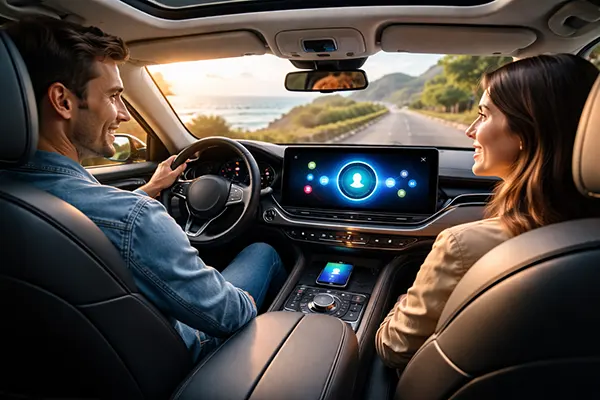
Generative AI has quietly moved from phone apps into dashboards. By 2026, the most useful versions are not “robot drivers”, but chat-style voice assistants that can answer questions, summarise a handbook, translate requests into actions the car can execute, and provide web-backed information when connected. Some systems are factory-fitted, others arrive through software updates, and that difference affects what data is processed in the cloud, which accounts are involved, and how easily the feature can be disabled.
Who is shipping in-car chat assistants in 2026, and how they are implemented
Several manufacturers now treat conversational assistance as a normal part of infotainment rather than a one-off experiment. The common pattern is a hybrid system: the car keeps a traditional voice layer for vehicle controls (temperature, navigation, media), while a large language model handles broader questions, explanations, and natural conversation. This split is intentional, because it reduces the chance that a free-form chatbot can trigger unintended or unsafe actions.
Mercedes-Benz has publicly described its approach as combining web search with generated responses inside its MBUX voice experience. In practical terms, the assistant can handle general knowledge questions and offer more natural dialogue, while still relying on the car’s established command structure for driving-related functions. For drivers, the key point is that “smart answers” often depend on connectivity and on external services, which can vary by market and model year.
Volkswagen Group brands have also highlighted integration where a conversational model is layered into the existing voice assistant rather than replacing it outright. This matters because it suggests the assistant is designed to be optional and bounded: you get conversational help for broad questions, but core vehicle operations remain governed by the standard infotainment logic and confirmations.
BMW and the “car expert” idea: conversational help without handing over control
BMW has positioned generative assistance as a way to make the vehicle easier to understand. Instead of searching menus or reading long manuals, a driver can ask how a feature works, what a warning means, or where a setting lives. When it is done properly, this reduces friction for everyday ownership: fewer “I’ll look it up later” moments and less time parked with a phone in hand.
What makes this approach credible is the focus on guidance rather than authority. A conversational assistant can explain options, describe trade-offs (for example, comfort versus efficiency settings), and point you to the correct screen. But it should not “guess” at safety-critical instructions. The more mature designs treat the assistant like a knowledgeable guide that stays inside guardrails.
For users, the practical takeaway is that the assistant’s best role is translation and explanation: turning messy human language into clear steps and menu paths. If a system leans too heavily into being a “personality”, it can encourage longer interactions, which is the wrong direction for a driver-focused interface.
What these assistants can realistically do day-to-day (and where they still fall short)
The most reliable benefit in 2026 is intent translation. You speak naturally, and the assistant converts that request into something the car can act on: adjusting cabin temperature, setting navigation preferences, or changing media without requiring a rigid phrase. This is especially useful in cars where traditional voice commands are technically capable but painfully strict in wording.
A second strong use case is “manual search without the manual”. Drivers frequently need quick clarity: tyre pressure monitoring resets, pairing a new phone, switching driver profiles, or interpreting common dashboard alerts. A conversational assistant can summarise the relevant steps in plain English and keep you moving through the process without forcing you to scroll through dense on-screen documentation.
The third area is general knowledge and planning. When connected, an assistant can answer location-based questions, provide quick explanations, translate messages, or help draft a short note hands-free. This can be genuinely convenient, but it is also where cloud dependency shows up: without signal, the assistant may drop back to basic offline commands.
The hard limits: connectivity, reliability, and the “confidently wrong” problem
Most conversational systems still rely heavily on cloud processing. That means performance can vary depending on coverage, roaming, and the stability of external services. When connectivity is weak, the assistant often reverts to a simpler command set, and the driver experiences a sharp difference between “chatty and helpful” and “only understands basic controls”.
Another limitation is reliability of facts. Generative systems can produce answers that sound plausible but are incorrect, especially when asked for specific figures, technical procedures, or nuanced safety guidance. In a vehicle, the risk is not abstract: a driver might act quickly on a confident-sounding explanation. That is why responsible implementations constrain the assistant to verified sources (such as official documentation) for operational guidance.
Finally, there is a human-factors issue: conversation can draw attention. Even with hands-free voice, the mind can still be pulled away from driving. A sensible in-car assistant should keep responses short while the vehicle is moving, ask clarifying questions only when needed, and offer to continue longer explanations when parked.
Privacy and security risks: what data is involved, and practical ways to reduce exposure
Privacy is not only about whether the car “listens”. The bigger question is where requests are processed and what they are linked to. Once an assistant is connected to cloud services, web search, and personal accounts, your interactions can produce data trails that include timestamps, general location context, device identifiers, and the content of your queries. Even if voice audio is not stored long-term, metadata can still exist for diagnostics and service improvement.
Manufacturers often say the assistant is separated from vehicle data, but the real-world picture is more complex. A system may claim not to “share vehicle data” with a chatbot, yet still send contextual information necessary to fulfil a request (for example, language, region, or coarse location). The practical approach is to assume that enabling online features expands what can be processed externally, then decide what trade-offs you accept.
Security matters alongside privacy. Any connected assistant increases the number of components that must be kept current: infotainment software, voice services, cloud APIs, and third-party integrations. Cars stay on the road for many years, so long-term update support and clear permissions are not “nice to have” features—they shape the real risk profile over the lifetime of the vehicle.
A driver’s checklist for safer use (without giving up the benefits)
First, treat the assistant like a semi-public channel. Avoid dictating passwords, confidential work details, financial identifiers, or medical information. Even if a brand claims short retention, the safest assumption is that some form of logging may exist for troubleshooting, quality testing, or regulatory reasons, and that logs can be accessed under certain conditions.
Second, actively review the privacy and data settings in the infotainment system and companion app. Look for switches that disable online voice processing, limit personal data usage, or prevent account linking. If the vehicle has multiple driver profiles, set a conservative default profile for shared use and only enable richer online features when you personally need them.
Third, separate “chat” from “control” in your habits. Use the assistant for general questions, quick explanations, and simple comfort or navigation adjustments. For anything safety-critical—driver assistance settings, charging limits, warning indicators, tyre pressures—confirm using the official on-screen menus or the handbook section the assistant references. This keeps the convenience while reducing the chance of acting on an incorrect or overconfident answer.