
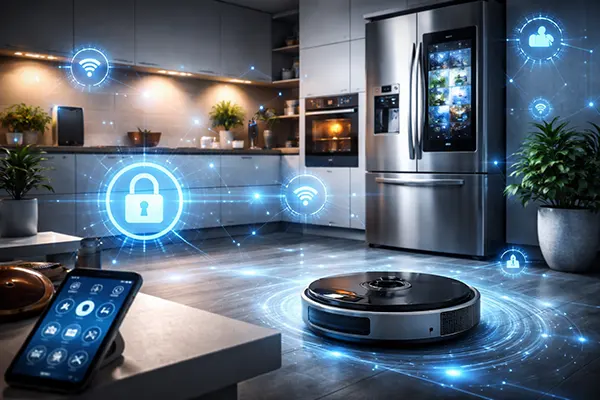
Cyber Risks of Smart Home Appliances: From Robot Vacuums to Connected Fridges
Smart home appliances have moved from novelty to everyday reality. Robot vacuum cleaners map entire flats, fridges track groceries, and ovens connect to mobile apps. Convenience is obvious, but behind it lies a growing layer of cyber risk. By 2026, security researchers and regulators increasingly warn that poorly protected devices can expose personal data, create entry points for hackers, and even become part of large-scale cyberattacks. Understanding how these risks arise is essential for anyone using connected appliances at home.
How Smart Appliances Collect and Process Data
Modern appliances rely on sensors, cameras, microphones and cloud connectivity to function efficiently. A robot vacuum, for example, builds a detailed map of a home’s layout. Smart refrigerators log consumption habits, while washing machines track usage patterns and maintenance cycles. This data is often transmitted to remote servers for processing, which introduces dependency on external infrastructure.
Manufacturers use this information to improve performance and personalise features. However, the same datasets can reveal highly sensitive details about daily routines, household size, or even periods when a home is empty. In 2024–2025, several security audits found that some devices transmitted data without proper encryption or relied on outdated communication protocols.
Another issue is data retention. Many users are unaware that their appliance history may be stored indefinitely in cloud systems. In the absence of strict data minimisation policies, this creates a long-term privacy footprint that can be exploited if breached or mishandled.
Where Data Exposure Risks Begin
Weak authentication remains one of the most common vulnerabilities. Default passwords, rarely changed by users, are still widely used across smart appliances. Attackers can scan networks and gain access to devices within minutes if credentials are not secured.
Firmware updates are another weak point. Some manufacturers do not provide regular security patches, leaving known vulnerabilities unaddressed. Even when updates exist, users may not install them promptly, creating a window of exposure.
Third-party integrations also increase risk. Many appliances connect with voice assistants or mobile ecosystems, expanding the number of access points. Each additional connection introduces potential misconfigurations and data-sharing pathways that are not always transparent.
Real Cyber Threats Targeting Connected Home Devices
By 2026, botnet attacks remain one of the most significant threats linked to smart appliances. Compromised devices can be silently recruited into networks used for distributed denial-of-service (DDoS) attacks. This was already demonstrated in earlier incidents like Mirai, and similar techniques continue to evolve.
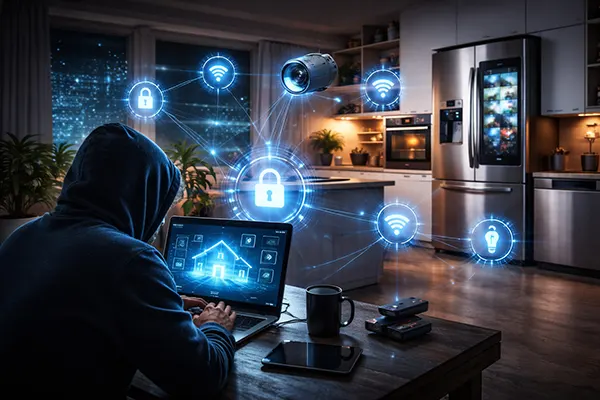
Another growing concern is unauthorised surveillance. Devices equipped with cameras or microphones, such as smart fridges with internal cameras or robotic cleaners with visual navigation, can potentially be accessed remotely if security is weak. In documented cases, attackers have gained control over video feeds due to unsecured APIs.
Ransomware targeting IoT devices is also emerging. While still less common than attacks on computers, researchers have demonstrated scenarios where access to smart home systems can be locked, forcing users to reset or pay to regain control.
Attack Vectors Used by Hackers
Network-level attacks are often the starting point. If a home Wi-Fi network lacks proper encryption or segmentation, attackers can intercept traffic or move laterally between devices. This makes even a single vulnerable appliance a gateway to the entire home network.
Cloud service breaches represent another layer of risk. Even if a device itself is secure, a vulnerability in the manufacturer’s backend systems can expose user data. In recent years, several IoT companies faced incidents where user credentials or device logs were leaked.
Mobile applications used to control appliances can also be exploited. Poorly secured apps may expose authentication tokens or fail to validate user input properly, allowing attackers to bypass controls and gain remote access.
Practical Ways to Reduce Risks in Smart Homes
Users can significantly reduce exposure by applying basic security practices. Changing default passwords, enabling two-factor authentication where available, and regularly updating firmware are essential first steps. These measures address the most common attack methods.
Network segmentation is increasingly recommended by cybersecurity experts. Placing smart appliances on a separate Wi-Fi network limits the impact of a compromised device. Even if one appliance is breached, it cannot easily access personal computers or sensitive data.
Choosing manufacturers with transparent security policies also matters. Devices that receive regular updates and comply with recognised standards, such as ETSI EN 303 645 in Europe, offer a higher level of protection. By 2026, regulatory pressure is pushing companies to improve baseline security, but differences between brands remain significant.
Long-Term Security Habits for Connected Living
Regular audits of connected devices help maintain control over the home environment. Users should review which appliances are connected, what permissions they have, and whether they are still needed. Removing unused devices reduces unnecessary exposure.
Awareness of data sharing settings is equally important. Many appliances allow users to limit data collection or disable certain features. Taking time to adjust these settings can reduce the amount of personal information transmitted to external servers.
Finally, cybersecurity should be considered during the purchase stage. Instead of focusing only on features, buyers benefit from checking how long a manufacturer supports updates, whether encryption is implemented properly, and how transparent the company is about handling user data. These factors increasingly define the real value of smart appliances.