
Autonomous Surgical Robots in 2026: How Far Has Robotic Surgery Really Advanced?
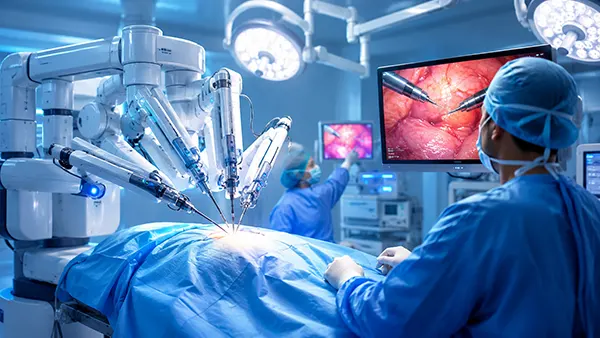
The idea of a robot carrying out an operation by itself is no longer pure science fiction, but it is also not an accurate description of everyday robotic surgery in 2026. Modern surgical robots can make movements more precise, filter hand tremor, provide magnified three-dimensional views, restrict instruments from entering sensitive areas and, in selected procedures, carry out predefined tasks with limited direct input. Artificial intelligence is also beginning to recognise anatomy, analyse surgical video and help doctors make decisions while an operation is taking place. Yet the surgeon remains central. Most soft-tissue operations described as robotic are still performed by a human who controls the instruments, makes the clinical decisions and takes responsibility for the procedure. The important change is therefore not that robots have replaced surgeons, but that the boundary between a surgical instrument and an intelligent assistant has started to move. By 2026, some systems have genuine autonomous functions, while experimental robots can complete surprisingly complex surgical sequences. The difference between those two categories is essential when judging how far the technology has actually progressed.
What Robotic Surgery Can Already Do in 2026
Robotic-assisted surgery is now established across several medical specialties, particularly urology, general surgery, gynaecology, thoracic surgery and some cardiac procedures. The commercial field has also become more varied. Intuitive’s da Vinci 5 received its original US Food and Drug Administration clearance in 2024, and its authorised uses continued to expand afterwards. In January 2026, the FDA cleared the system for selected cardiac procedures, while force-feedback instruments for da Vinci 5 received another clearance in March. Medtronic’s Hugo robotic-assisted surgery system received US clearance for urological surgery in December 2025. CMR Surgical’s Versius family has also expanded its regulatory presence, while Johnson & Johnson reached an important milestone in July 2026 when the FDA granted De Novo authorisation to the OTTAVA robotic surgical system for a range of upper-abdominal general surgery procedures. These developments mean hospitals now have a broader choice of advanced robotic equipment than they did only a few years ago.
Despite these advances, the word “robot” can give patients the wrong impression of what happens in the operating theatre. With the mainstream soft-tissue systems, the surgeon normally remains at a console or another control position and directs the surgical instruments. The robot translates the surgeon’s movements into smaller and highly controlled movements inside the patient. Software can remove natural hand tremor, scale movement and help the instruments work through small incisions in areas where conventional laparoscopic tools may be harder to manoeuvre. Newer systems also place greater emphasis on ergonomics, imaging, data collection and feedback. Force feedback, for example, can give a surgeon additional information about the forces applied through an instrument. None of these features means that the machine has independently decided where to cut, what tissue to remove or how to respond to a major complication.
A useful way to understand the progress is to separate robotic assistance from autonomy. A systematic review of FDA-cleared surgical robots classified systems from basic robot assistance through task autonomy and conditional autonomy to theoretical high and full autonomy. Among 49 robots identified in the review, 86% were classified at the first level, where the surgeon remains in continuous control. Eight per cent had task-level autonomy, and 6% reached conditional autonomy, meaning they could generate patient-specific strategies for particular tasks while still depending on surgeon approval. No clinically cleared systems in that analysis reached the two highest categories. A 2026 review of robotic surgery and artificial intelligence reached a similar overall assessment: useful autonomous functions are already employed in selected rigid-anatomy specialties, but autonomous soft-tissue surgery remains at an early experimental stage. This distinction is much more meaningful than simply asking whether a machine is called a surgical robot.
Where Autonomous Functions Are Already Used
The clearest examples of useful autonomy appear in procedures where the target is relatively stable and can be mapped accurately before or during surgery. Orthopaedic surgery is a good example because bone does not continuously stretch, deform or move in the way that organs and other soft tissues do. A computer can use medical images and measurements to help produce a patient-specific plan, establish boundaries and guide preparation of the bone. Depending on the system, the machine may constrain a surgeon’s movement, position a cutting guide or perform a predefined part of bone preparation. These are genuine forms of automation, but they work inside tightly defined limits. The surgeon still confirms the plan, checks alignment and remains responsible for the operation. NICE’s assessment of robotic-assisted orthopaedic technologies, for example, describes systems such as Mako as giving the surgeon haptic boundary control while the surgeon directly performs the cutting rather than allowing the robot to conduct the entire procedure independently.
Higher levels of autonomy have nevertheless reached approved medical devices for specialised tasks. Research examining FDA-cleared surgical robots found conditional-autonomy applications involving patient-specific planning and execution for tasks such as bone milling, prostate biopsy and robotic hair-follicle extraction. In these cases, autonomy does not mean handing an entire operation to a machine. It means transferring a narrow and clearly defined portion of the work. A robot may calculate an appropriate path from medical images, position an instrument or execute an approved movement while continuously monitoring predefined conditions. The clinician chooses or approves the strategy and can intervene. This model is important because it shows how surgical autonomy is likely to develop: not through an abrupt switch from human surgery to robot surgery, but through individual parts of an operation becoming automated when there is enough evidence that the machine can perform them safely and consistently.
Artificial intelligence is adding another layer that does not necessarily involve autonomous movement at all. Computer-vision systems can analyse images from an endoscope and identify anatomical structures, track instruments or warn the surgical team when instruments approach sensitive areas. In August 2026, UCL and University College London Hospitals reported the first patient in a clinical trial using their AI system for real-time assistance during pituitary tumour surgery. The software analysed live surgical video and highlighted important structures around the base of the brain to support the neurosurgeon’s decisions. The surgeon still performed the operation; the AI did not control the surgical instruments. This type of development may be more representative of the immediate future than fully independent robots. AI can first become an additional set of eyes in the operating theatre, supporting perception and decision-making before it is trusted with greater control over physical surgical actions.
The Biggest Autonomous Surgery Breakthroughs Since 2022
One of the most important experimental milestones came from Johns Hopkins University with the Smart Tissue Autonomous Robot, or STAR. In 2022, researchers reported an autonomous laparoscopic procedure involving intestinal tissue in a live pig. The system performed an intestinal anastomosis, the delicate task of joining two ends of the intestine. This attracted attention because suturing soft tissue is far harder to automate than following a planned route through bone. Tissue changes shape as it is grasped, moved and stitched, so the robot must continually account for changes in position. STAR demonstrated that important parts of this process could be automated. However, it operated under carefully controlled experimental conditions, used specialised methods to help track tissue and was not a robot independently treating human patients. Its value was as proof that autonomous manipulation of living soft tissue was technically possible, not as evidence that autonomous operating theatres had arrived.
A major step beyond that work appeared in 2025 with the Surgical Robot Transformer-Hierarchy, known as SRT-H. Johns Hopkins and collaborating researchers trained the system using surgical demonstrations and tested it on an ex vivo stage of gallbladder removal. Instead of learning only one short movement, the robot carried out a long sequence containing 17 surgical tasks. It had to identify structures, manipulate tissue, position clips and use scissors, while also recovering when the situation differed from the expected starting condition. The researchers reported successful autonomous performance across eight different ex vivo gallbladders. The robot was slower than an experienced human surgeon, but the experiment was significant because it showed that an AI-controlled robot could link individual skills into a longer surgical sequence and adjust its behaviour when circumstances changed. That ability to recover from an imperfect situation is one of the major requirements for any future clinically useful autonomous system.
The result still needs to be interpreted carefully. Ex vivo tissue is removed from a living body, so the experiment did not reproduce every difficulty encountered during human surgery. There was no living patient’s circulation, changing blood pressure, anaesthetic condition or full physiological response to an unexpected event. A 2026 review in Nature Reviews Urology therefore describes high-autonomy demonstrations involving systems such as STAR and SRT-H as remaining within ex vivo or preclinical animal research rather than routine human surgery. This is an important reality check. Research robots can now complete sequences that would have seemed extraordinarily ambitious a decade ago, but success in a controlled experiment does not automatically translate into permission to operate independently on patients. Clinical adoption requires far more evidence, including performance across many anatomical variations, reliable handling of complications and proof that the technology offers patients a meaningful advantage rather than simply demonstrating impressive engineering.
Why Soft-Tissue Surgery Is So Much Harder to Automate
Soft tissue creates problems that are largely absent in industrial robotics. A robot assembling a manufactured object usually knows the exact dimensions and position of every component. Human anatomy is different. Organs vary between patients, tissue can shift when touched, breathing causes movement and structures can deform as an operation progresses. Even a technically routine procedure may suddenly change because of scar tissue from an earlier operation, unexpected inflammation or an anatomical variation that was not obvious on a preoperative scan. Bleeding can rapidly obscure the camera view and change the priorities of the procedure within seconds. A human surgeon does not simply follow a memorised sequence in these situations. The surgeon interprets what has happened, decides whether the original plan remains safe and may change technique immediately. Reproducing that combination of perception, judgement and physical skill is much more difficult than automating a predictable movement.
Sensing is another major challenge. Vision provides enormous amounts of information, but surgeons also judge how tissue behaves when it is pulled, pressed or cut. A structure that looks similar to another structure may feel different. Robotic systems increasingly use force sensing and improved imaging to give both surgeons and software more information. The da Vinci 5 generation, for example, includes force-feedback capabilities with instruments cleared by the FDA. Such feedback can help a surgeon understand how much force is being applied, while future autonomous systems may use similar data to judge whether tissue is behaving as expected. Researchers are also working on ways for robots to combine visual information with measurements of force and movement. The objective is not merely to make a robot move accurately, but to allow it to recognise when the physical response of the tissue differs from what its model predicted.
The hardest problem may be uncertainty. A clinically useful autonomous robot would need to know when it does not have enough information to continue safely. If the camera becomes obscured, an instrument slips or unexpected bleeding starts, continuing the original plan could be dangerous. Safe autonomy therefore requires more than an algorithm that performs well under normal conditions. The system must detect unusual circumstances, assess whether its confidence has fallen below an acceptable level and hand control back to a surgeon when necessary. It must also function as part of an operating-room team that includes anaesthetists, nurses and other clinicians. This is why a future autonomous surgical robot is more likely to resemble a highly supervised specialist than an independent replacement for the surgical team. The ability to stop at the right moment may eventually prove just as important as the ability to complete a task automatically.
What Patients and Hospitals Should Expect Next
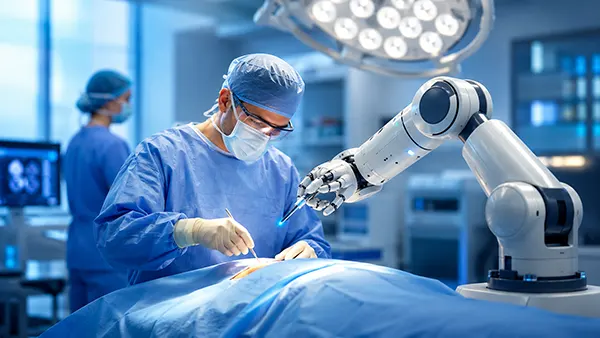
The next phase of robotic surgery is likely to bring more autonomy to individual tasks rather than entire operations. Camera positioning, instrument tracking, surgical planning, identification of anatomy and carefully bounded movements are natural candidates because they can be defined and tested more easily than a whole operation. Some repetitive elements of suturing, tissue manipulation or preparation may also become increasingly automated as research matures. AI may simultaneously monitor what is happening and provide warnings when the surgical sequence differs from an expected pattern. In practical terms, the surgeon may gradually move from controlling every motion to approving plans and supervising selected automated actions. That transition could reduce physical workload and make certain highly repetitive tasks more consistent, but only if clinical trials show that the additional automation improves safety, efficiency or patient outcomes.
Regulation will be one of the main factors determining the speed of that transition. A system that merely follows a surgeon’s hand movements presents a different type of risk from software that chooses a movement itself, and a robot carrying out one predefined task is different again from a system that changes a surgical plan during the procedure. Regulators therefore need evidence not only that the mechanical equipment works correctly, but also that automated decisions remain reliable across different patients and clinical settings. Training data must represent the anatomy and circumstances the system is likely to encounter. Hospitals also need clear procedures for software updates, maintenance, cybersecurity, staff training and emergency conversion to conventional surgery. Responsibility must remain identifiable when an automated function contributes to a decision or physical action. These issues are less dramatic than a demonstration of a robot tying a suture, but they are fundamental to safe clinical adoption.
Competition between manufacturers may also accelerate the development of useful robotic functions. By 2026, da Vinci is no longer the only major name shaping the future of soft-tissue robotic surgery in the United States. Hugo, Versius and OTTAVA represent different approaches to the organisation of robotic equipment and the surgical workspace, while specialist robots continue to develop in orthopaedics, neurosurgery and other fields. More choice may encourage improvements in ergonomics, imaging, feedback, instrument design and operating-room efficiency. Patients should nevertheless avoid assuming that a newer robot automatically produces a better clinical result. The experience of the surgeon, the suitability of robotic assistance for the particular operation, the hospital team’s training and the evidence for that specific procedure remain more important than the novelty of the equipment. Robotic surgery is a method of performing surgery, not a guarantee of a particular outcome.
Will Robots Replace Surgeons?
There is no evidence in 2026 that surgeons are close to disappearing from operating theatres. Even the most advanced experimental systems have been designed around defined surgical tasks and controlled research conditions. Human surgery requires far more than accurate instrument movement. Surgeons interpret scans and laboratory results, decide whether an operation should be performed at all, choose between competing treatment options, respond to unexpected findings and balance risks that may be different for every patient. They also communicate with patients and families and coordinate decisions with other clinicians. These responsibilities cannot be reduced to the mechanical part of an operation. What robotics can change is how much of that mechanical work requires continuous manual control.
A more realistic future is shared control. The surgeon could remain responsible for strategy while increasingly capable software handles tasks that are repetitive, measurable and suitable for automation. A system might position a camera, maintain a safe viewing angle, identify anatomical landmarks, propose a route, complete a series of approved stitches or restrict an instrument from entering an unsafe area. The surgeon would monitor those actions and take direct control when circumstances demand judgement outside the system’s validated limits. This arrangement is similar to the direction already seen in other safety-critical technologies: automation manages well-defined work, while a trained human remains responsible for supervision and exceptional situations. As confidence and evidence grow, the balance may continue to shift, but each additional autonomous function will need to justify the extra responsibility being given to the machine.
Robotic surgery has therefore travelled a considerable distance by 2026, but not in the form often imagined in popular descriptions of “robot surgeons”. Commercial soft-tissue systems have become more capable, several manufacturers now compete in major markets, force feedback and AI-assisted perception are moving forward, and specialised robots already perform limited automated tasks. Research systems have gone further, demonstrating autonomous suturing and multi-step soft-tissue procedures under experimental conditions. What medicine does not yet have is a clinically established robot that can independently plan and perform a complex soft-tissue operation on a human patient while safely managing everything that might happen along the way. The next important advances will probably come from carefully expanding task autonomy rather than trying to remove the surgeon from the room. Progress will ultimately be judged by fewer complications, more consistent care and better patient outcomes, not by how little human involvement a demonstration can achieve.